Leopard: Unleashing Wild Typography for Bold Brands
The Anatomy of a Predator-Inspired Typeface
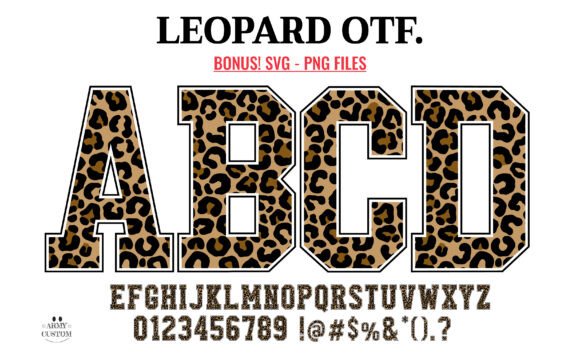
When you first look at the Leopard font, it’s impossible to ignore the immediate connection to the natural world. This isn't just a standard serif or sans serif with a fancy name; it is a piece of modern typography that mimics the organic, irregular beauty of a big cat's coat. The defining characteristic of this premium font is the texture. Unlike standard vector types that rely on solid fills, the Leopard typeface is constructed from negative space patterns that replicate rosettes and spots. This gives the letters a tactile, almost three-dimensional quality that static fonts simply cannot achieve.
The personality of Leopard is fierce, untamed, and undeniably dynamic. It carries a sense of movement, as if the letters themselves are stalking across the page. However, despite its wild aesthetic, the underlying structure maintains a surprising finesse. The kerning and spacing are designed to ensure that the pattern doesn't become overwhelming, allowing the actual message to shine through the visual noise. It occupies a unique niche in design assets, bridging the gap between raw, animalistic energy and sophisticated graphic design. It is a creative font that demands attention without screaming for it, offering a textured elegance that feels luxurious and grounded.
Strategic Applications: Where the Print Meets the Pavement
Finding the right home for a typeface as distinct as Leopard requires a bit of strategic thinking. Because it is a display font by nature, it thrives in environments where impact is the primary goal. You wouldn't want to use this for body text in a novel, but for headers, logos, and signage, it is incredibly effective. If you are working on logo design for a boutique fitness studio, a fashion brand, or an adventure travel company, this font immediately communicates a specific vibe—strength, agility, and style.
Consider the world of packaging design. If you are a small business owner creating labels for a high-end skincare line or a specialty coffee brand, using Leopard can instantly elevate the shelf presence. The texture adds a layer of perceived value; it looks like a custom illustration rather than a typed word. Similarly, in editorial design, such as magazine covers or feature article headers, this typeface can break the monotony of standard grids. It introduces an element of the wild that makes a layout feel fresh and contemporary.
For those in the digital space, social media graphics are a perfect playground for this font. In a scrolling environment, you have milliseconds to capture attention. The unique silhouette of the Leopard letters creates an immediate pattern interrupt. It works beautifully for Instagram stories, Pinterest pins, or YouTube thumbnails where visual distinctiveness correlates directly with click-through rates.
Technical Realities and Compatibility
One of the most critical aspects of implementing any commercial font is understanding its technical limitations, and Leopard comes with specific requirements that users must heed. The most important distinction lies between the black version and the color version. If you are a crafter or a maker using cutting machines like a Cricut or Silhouette, the black version is fully compatible with Cricut Design Space. You can cut these letters out of vinyl, cardstock, or iron-on material just like any other font. This makes it an excellent choice for physical products, custom apparel, and signage.
However, the color version operates differently. Because the "color" is actually a pattern fill rather than a solid stroke, it requires specific software capabilities to render correctly. This version is compatible with professional design software such as Adobe Photoshop, Adobe Illustrator, Silhouette Studio (Designer Edition or higher), and Inkscape. It is crucial to note that the color OTF or TTF files are not compatible with Cricut Design Space. If you attempt to upload the color version to a basic cutting machine interface, the machine will likely interpret the pattern as individual cut lines, resulting in a mess of tiny cuts rather than a solid letter. Always ensure you are using the correct file version for your specific project workflow.
Mastering the Mix: Pairing and Hierarchy
Using a creative font like Leopard effectively often comes down to what you pair it with. Because this typeface is high-energy and visually dense, it requires a partner that can play a supporting role. A common mistake is pairing a textured display font with another complex script font or an overly ornate serif font. This creates visual clutter and makes the text difficult to parse.
The best approach is to utilize contrast. Pair Leopard with a clean, geometric sans serif font. The simplicity of the sans serif will ground the wildness of the Leopard texture, creating a balanced visual hierarchy. For example, if you are designing a poster, use Leopard for the main headline to draw the eye, and then use a light-weight sans serif for the sub-headline and body copy. This ensures readability while maintaining the thematic consistency of the design.
In terms of brand identity, consistency is key. If you choose Leopard for your logo, try to incorporate the texture sparingly in other brand elements—perhaps as a background pattern or a divider line—rather than using the font for every piece of text. Overuse can dilute its power. It should be the accent that adds "bite" to your brand voice, not the noise that drowns out your message.
Evaluating Fit and Licensing
Before committing to Leopard for a commercial project, it is wise to run a few tests. Type out the specific words you plan to use. Some letters in textured fonts can look different depending on the complexity of the word. Check the readability at the size you intend to display it. While it is legible at larger sizes, the intricate pattern may lose definition if reduced too small.
Furthermore, always review the licensing agreement included with the font files. Since this is a premium font, the license typically covers specific use cases. Whether you are using it for personal crafting projects or large-scale commercial distribution, understanding the terms ensures you stay compliant. For designers and agencies, keeping a record of your font pairing choices and license receipts is part of professional asset management.
Ultimately, Leopard is more than just a typeface; it is a design statement. It allows creators to inject a sense of nature, power, and raw beauty into their work. By respecting its technical requirements and pairing it thoughtfully, you can transform standard layouts into memorable visual experiences that resonate with a modern audience.